Los Angeles Chargers vs New York Giants Match Player Stats
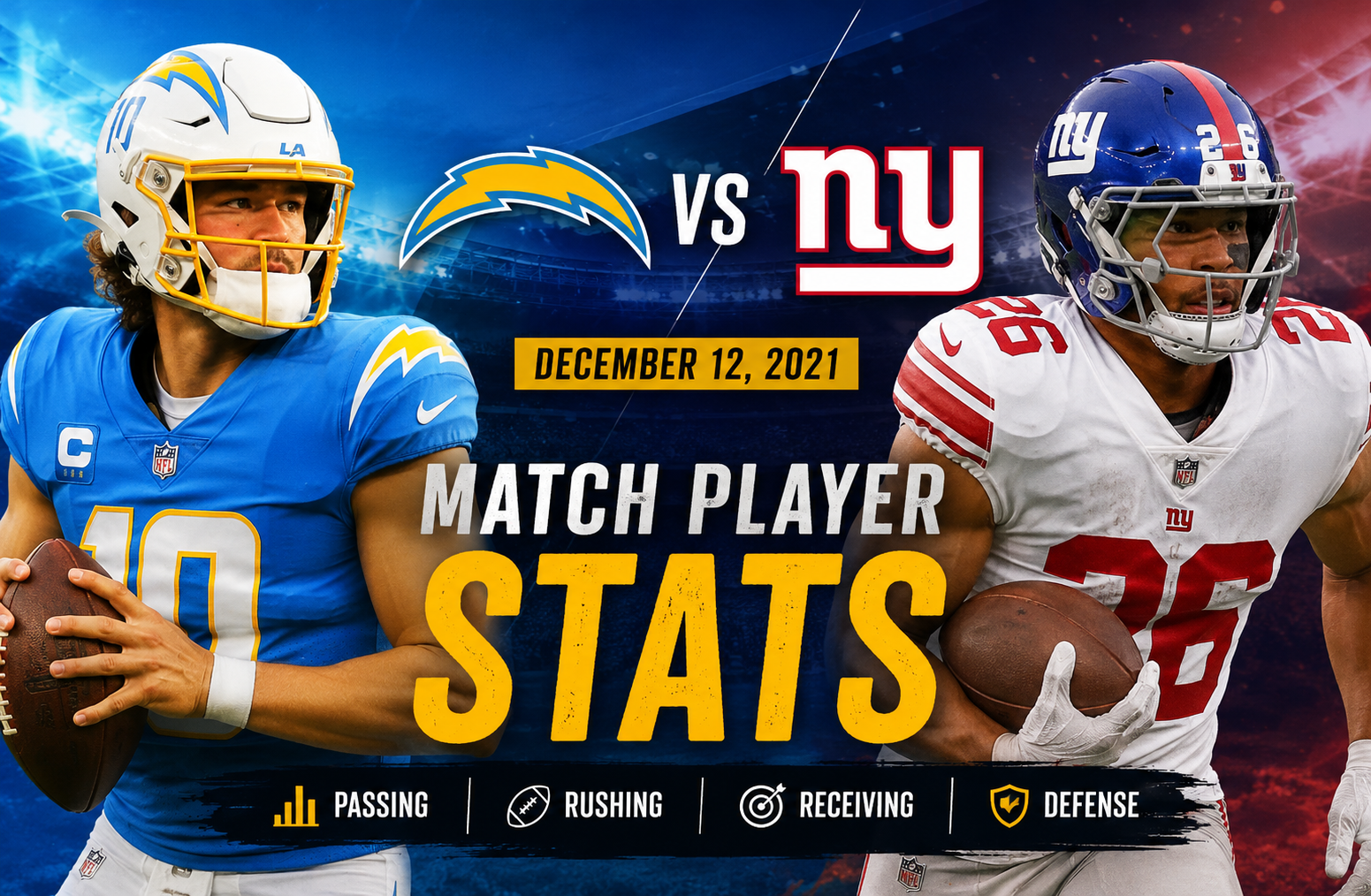
The Los Angeles Chargers vs New York Giants Match Player Stats tell the story of a game where efficiency, quarterback play, and ball security made the difference. When the Los Angeles Chargers hosted the New York Giants on December 12, 2021, at SoFi Stadium, the Chargers secured a convincing 37-21 victory. While the final score suggests a comfortable win, the individual performances behind the result reveal why Los Angeles controlled the contest from start to finish.
For football fans, player statistics provide more than numbers. They explain momentum swings, coaching decisions, offensive execution, and defensive effectiveness. In this matchup, several Chargers players delivered standout performances, while the Giants struggled to generate enough offensive consistency to keep pace.
This detailed breakdown examines the most important player performances, team statistics, tactical takeaways, and lessons from one of the most memorable meetings between these franchises.
Match Overview
The Chargers entered the game seeking to strengthen their playoff position, while the Giants were attempting to remain competitive despite injuries and roster challenges.
Final Score
New York Giants: 21
Los Angeles Chargers: 37
The Chargers improved their record while showcasing one of their most balanced offensive performances of the season. They accumulated 423 total yards compared to New York’s 316 and committed zero turnovers throughout the game.
Why Match Player Stats Matter
Match statistics help fans understand what happened beyond the scoreboard.
Key insights gained from player statistics include:
- Quarterback efficiency
- Rushing effectiveness
- Receiving production
- Defensive impact
- Turnover management
- Red-zone performance
- Possession control
In this contest, nearly every major statistical category favored Los Angeles.
Los Angeles Chargers Offensive Performance
The Chargers offense demonstrated balance and explosiveness.
Key team numbers included:
- 423 total yards
- 275 passing yards
- 152 rushing yards
- 26 first downs
- Zero turnovers
- More than 34 minutes of possession time
This combination allowed Los Angeles to control the pace from the second quarter onward.
Justin Herbert’s Outstanding Performance
Quarterback play often determines NFL outcomes, and Justin Herbert delivered one of his most efficient games of the season.
Justin Herbert Stats
- Completions/Attempts: 23/31
- Passing Yards: 275
- Passing Touchdowns: 3
- Interceptions: 0
- Passer Rating: 133.1
Herbert displayed excellent decision-making throughout the game. His ability to spread the ball among multiple receivers prevented the Giants defense from focusing on any single target.
One particularly notable aspect of Herbert’s performance was his avoidance of mistakes. The absence of turnovers allowed Los Angeles to maintain momentum and capitalize on scoring opportunities.
The quarterback consistently attacked downfield while remaining accurate in short and intermediate routes. His three touchdown passes highlighted both his arm strength and situational awareness.
Chargers Receiving Leaders
The Chargers receiving group delivered production despite facing defensive attention throughout the contest.
Jalen Guyton
The Jalen Guyton produced one of the game’s biggest plays.
Jalen Guyton Stats
- Receptions: 3
- Receiving Yards: 87
- Touchdowns: 1
His 59-yard touchdown reception before halftime significantly shifted momentum toward Los Angeles.
Josh Palmer
The rookie receiver contributed an important touchdown.
Josh Palmer Stats
- Touchdown Reception: 12 yards
Palmer’s development throughout the season gave Herbert another reliable target in critical situations.
Jared Cook
Veteran tight end Jared Cook provided a red-zone scoring option.
Jared Cook Stats
- Touchdowns: 1
His fourth-quarter touchdown effectively sealed the victory.
Chargers Running Game Analysis
A strong rushing attack complemented Herbert’s passing efficiency.
Austin Ekeler
The Austin Ekeler once again demonstrated why he remains one of the league’s most versatile running backs.
Austin Ekeler Stats
- Carries: 12
- Rushing Yards: 67
- Rushing Touchdowns: 1
- Average Per Carry: 5.6
Ekeler’s early touchdown established offensive momentum. His ability to create explosive plays forced the Giants defense to respect both the run and pass.
Justin Jackson
Justin Jackson contributed valuable rushing yards and helped maintain offensive balance.
His contributions prevented New York from focusing exclusively on Herbert.
New York Giants Offensive Performance
While the Giants scored 21 points, much of their production came after the Chargers had already established a significant lead.
New York finished with:
- 316 total yards
- 191 passing yards
- 135 rushing yards
- Two turnovers
These numbers illustrate the challenge they faced throughout the afternoon.
Mike Glennon Statistics
Starting quarterback Mike Glennon had a difficult task against a motivated Chargers defense.
Mike Glennon Stats
- Completions/Attempts: 17/36
- Passing Yards: 191
- Passing Touchdowns: 2
- Interceptions: 1
- Passer Rating: 70.5
Although Glennon threw two touchdown passes, his overall efficiency lagged significantly behind Herbert’s.
The interception and inability to sustain drives consistently limited the Giants offense.
Saquon Barkley Performance
The Saquon Barkley remained one of New York’s brightest spots.
Saquon Barkley Stats
- Carries: 16
- Rushing Yards: 64
- Average Per Carry: 4.0
- Receiving Touchdown: 1
Barkley demonstrated his versatility as both a runner and receiver.
His fourth-quarter touchdown catch showcased the playmaking ability that has made him one of the NFL’s most dynamic offensive weapons when healthy.
Giants Receiving Leaders
Kyle Rudolph
Veteran tight end Kyle Rudolph generated the most receiving yards among Giants pass catchers.
Kyle Rudolph Stats
- Receptions: 2
- Receiving Yards: 66
His production came primarily through chunk plays rather than sustained offensive rhythm.
Elijhaa Penny
Penny contributed an early touchdown reception.
Elijhaa Penny Stats
- Receiving Touchdowns: 1
His score briefly tied the game in the first quarter before the Chargers gradually took control.
Defensive Performances
Defensive statistics often receive less attention than offensive numbers, but they frequently determine outcomes.
Chargers Defense
The Chargers defense delivered several key plays.
Major accomplishments included:
- One interception
- Two sacks
- Multiple third-down stops
- Limiting explosive offensive drives
The defense consistently pressured Glennon and forced difficult throws.
Kyzir White
The Kyzir White emerged as one of the Chargers’ defensive leaders.
Kyzir White Stats
- Total Tackles: 10
His activity around the football helped contain New York’s rushing attack.
Joey Bosa’s Influence
Although sacks do not always tell the complete story, Joey Bosa’s presence impacted pass protection schemes throughout the game.
His ability to generate pressure contributed significantly to the Giants’ offensive struggles.
Giants Defensive Effort
The Giants defense experienced moments of effectiveness but struggled to contain Herbert and the Chargers’ balanced offense.
Aaron Robinson
The Aaron Robinson recorded notable tackle production.
Aaron Robinson Stats
- Total Tackles: 9
His activity reflected the amount of time the defense spent on the field.
Team Statistics Comparison
The statistical comparison highlights why Los Angeles earned the victory.
| Category | Giants | Chargers |
| Total Yards | 316 | 423 |
| Passing Yards | 191 | 275 |
| Rushing Yards | 135 | 152 |
| First Downs | 20 | 26 |
| Turnovers | 2 | 0 |
| Time of Possession | 25:40 | 34:20 |
Every major category favored the Chargers.
Key Turning Points
Guyton’s Long Touchdown
The 59-yard touchdown reception by Jalen Guyton before halftime dramatically shifted momentum toward Los Angeles.
Turnover Battle
The Chargers protected the football while the Giants committed two turnovers. This difference created additional opportunities for Los Angeles.
Third Quarter Control
The Chargers outscored New York during the middle stages of the game and maintained consistent offensive pressure.
What These Statistics Reveal
The Los Angeles Chargers vs New York Giants Match Player Stats highlight three critical lessons.
Efficient Quarterback Play Wins Games
Herbert’s three-touchdown, zero-interception performance created a significant advantage.
Turnovers Remain Crucial
The Chargers committed no turnovers, while the Giants lost possession twice.
Balance Creates Problems for Defenses
Los Angeles combined effective rushing and passing attacks, preventing the Giants from predicting offensive tendencies.
Historical Importance of the Matchup
The victory continued a successful stretch for the Chargers in this interconference series.
At the time, Los Angeles extended its winning trend against New York and reinforced its playoff aspirations.
Lessons for Coaches and Analysts
Football analysts frequently examine games like this because they demonstrate how complementary football works.
Successful teams often share these characteristics:
- Strong quarterback efficiency
- Balanced offensive production
- Minimal turnovers
- Reliable red-zone execution
- Consistent defensive pressure
The Chargers displayed all five elements during this game.
How Fans Should Interpret Match Player Stats
Statistics are most valuable when viewed within context.
A quarterback’s passing yards alone do not determine success.
Instead, analysts should evaluate:
- Efficiency
- Situational performance
- Turnover avoidance
- Scoring production
- Impact on game flow
The Chargers excelled in each of these categories.
Frequently Asked Questions
Who won the Chargers vs Giants game?
The Los Angeles Chargers defeated the New York Giants 37-21 on December 12, 2021.
Who had the most passing yards in the game?
Justin Herbert led all quarterbacks with 275 passing yards and three touchdown passes.
How many rushing yards did Austin Ekeler record?
Austin Ekeler rushed for 67 yards and scored one rushing touchdown.
How many turnovers did the Giants commit?
The Giants committed two turnovers, while the Chargers committed none.
Who scored the longest touchdown of the game?
Jalen Guyton scored on a 59-yard touchdown reception from Justin Herbert.
What was the biggest statistical advantage for the Chargers?
The biggest advantages were total yardage, time of possession, quarterback efficiency, and turnover margin.
Conclusion
The Los Angeles Chargers vs New York Giants Match Player Stats demonstrate why Los Angeles earned a convincing 37-21 victory. Justin Herbert delivered elite quarterback play, Austin Ekeler provided balance in the running game, and the Chargers defense forced critical mistakes. The Giants showed flashes through Saquon Barkley and several individual contributors, but the overall statistical profile favored Los Angeles in nearly every meaningful category.
When reviewing this matchup years later, the numbers still provide a clear explanation of the outcome. Efficient offense, strong ball security, and consistent defensive execution enabled the Chargers to control the game from the second quarter onward and secure an important victory in their 2021 campaign.