Musician Benny Goodman: The King of Swing Explained
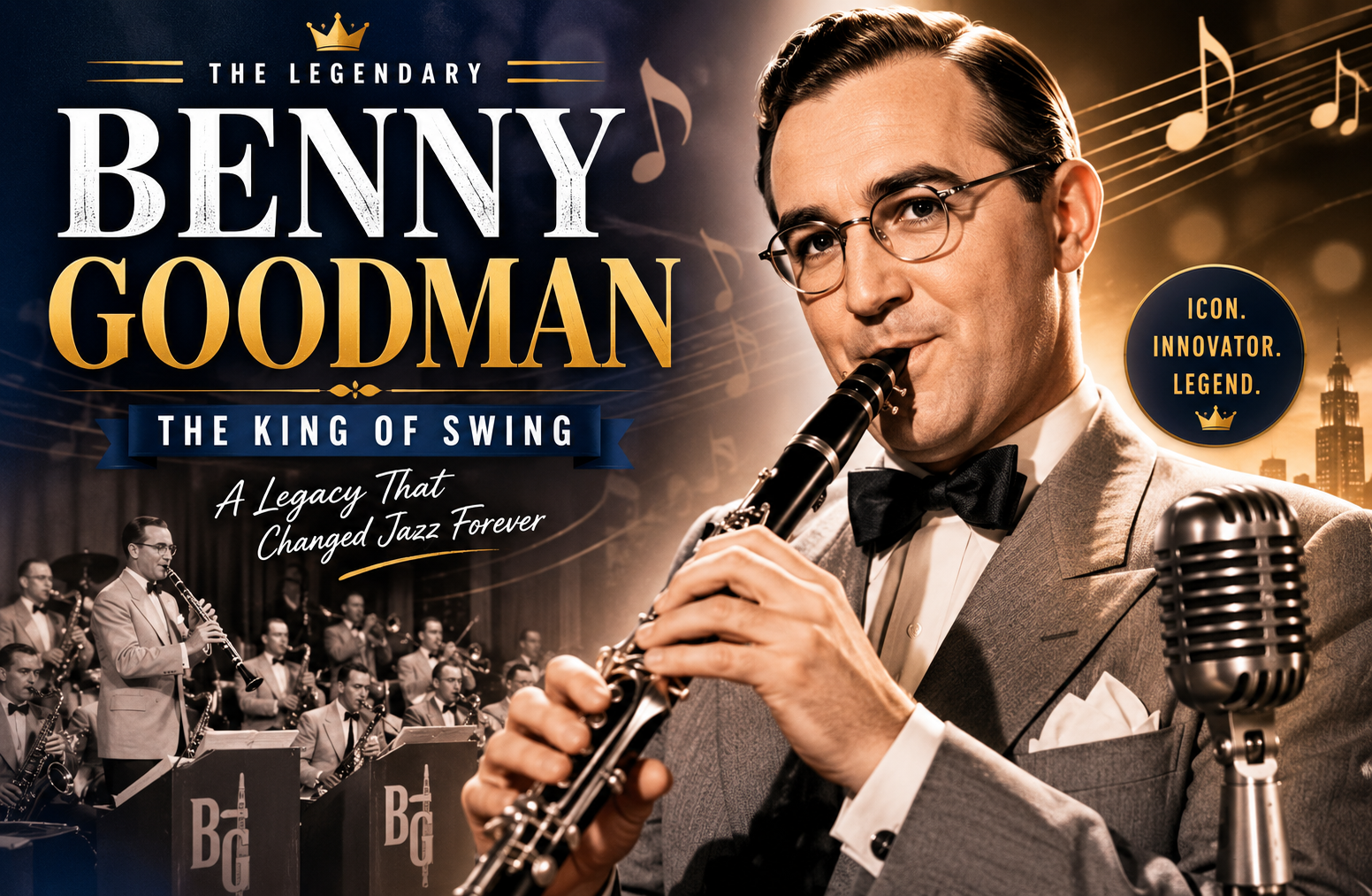
The story of musician Benny Goodman is one of talent, discipline, innovation, and cultural influence. Often remembered as the “King of Swing,” Goodman helped transform jazz from a regional musical style into a national phenomenon. His extraordinary clarinet skills, leadership of one of the most successful big bands in history, and contributions to American music continue to influence performers and audiences decades after his death.
For anyone interested in jazz history, big band music, or the evolution of popular culture in the twentieth century, understanding musician Benny Goodman is essential. His career represents a turning point in music history when jazz gained widespread acceptance and became a defining sound of an era.
Who Was Benny Goodman?
Benny Goodman was an American clarinetist and bandleader born on May 30, 1909, in Chicago, Illinois. He rose to fame during the 1930s and became one of the most recognizable figures in jazz music. Through his performances, recordings, and leadership, he helped popularize swing music across the United States.
Goodman’s influence extended beyond entertainment. He played a major role in shaping the music industry, elevating jazz performance standards, and bringing greater recognition to talented musicians regardless of their backgrounds.
Quick Facts About Benny Goodman
| Detail | Information |
| Full Name | Benjamin David Goodman |
| Born | May 30, 1909 |
| Birthplace | Chicago, Illinois |
| Profession | Clarinetist and Bandleader |
| Famous Title | King of Swing |
| Primary Genres | Jazz, Swing, Big Band |
| Died | June 13, 1986 |
Early Life and Musical Development
Benny Goodman grew up in a large family with limited financial resources. His parents encouraged him to participate in community programs that offered music instruction to children. These opportunities introduced him to the clarinet, an instrument that would eventually make him famous around the world.
Even as a child, Goodman displayed exceptional dedication. While many young musicians practiced casually, he devoted countless hours to improving his technique. His commitment to excellence allowed him to perform professionally while still a teenager.
The foundation built during these early years remained visible throughout his career. His performances were known for precision, consistency, and technical brilliance.
How Benny Goodman Became Famous
Goodman’s rise to stardom was not immediate. During the early years of his career, he worked as a session musician and performed with various groups. These experiences helped him develop both musical skills and professional connections.
His breakthrough came during the mid-1930s when swing music began gaining popularity. Leading his own orchestra, Goodman delivered energetic performances that captivated audiences across the country.
Several factors contributed to his success:
Exceptional Musicianship
Goodman possessed remarkable technical control of the clarinet. His ability to combine precision with creativity set him apart from many of his contemporaries.
Strong Leadership
As a bandleader, he demanded high standards from every member of his orchestra. While this approach sometimes earned him a reputation for being strict, it also helped create one of the finest bands of the era.
Memorable Arrangements
The music performed by Goodman’s orchestra featured sophisticated arrangements that appealed to both dancers and serious music listeners.
National Exposure
Radio broadcasts introduced his music to millions of Americans, helping him build a nationwide audience.
The Swing Era and Benny Goodman’s Role
The Swing Era remains one of the most celebrated periods in American music history. Characterized by strong rhythms, large ensembles, and energetic performances, swing music dominated popular culture during the 1930s and early 1940s.
Goodman became the face of this movement.
His orchestra performed at major venues, recorded bestselling songs, and inspired countless young musicians. As his popularity grew, so did the public’s interest in swing music.
Because of his immense influence, journalists and fans began referring to him as the King of Swing. The title became permanently associated with his legacy.
Musician Benny Goodman and the Carnegie Hall Concert
One of the defining moments in the career of musician Benny Goodman occurred on January 16, 1938, when he performed at Carnegie Hall in New York City.
At the time, many people viewed jazz primarily as dance music rather than serious art. Carnegie Hall was traditionally associated with classical performances, making Goodman’s appearance there highly significant.
The concert attracted enormous attention and demonstrated that jazz deserved recognition as an important artistic form.
Why the Concert Was Historic
The performance achieved several important milestones:
- It brought jazz into one of America’s most prestigious venues.
- It elevated public perception of swing music.
- It demonstrated the artistic complexity of jazz.
- It helped establish jazz as a respected cultural force.
Today, the concert is widely regarded as one of the most important events in jazz history.
Breaking Barriers Through Music
One of Benny Goodman’s most meaningful contributions extended beyond musical performance.
During a period when segregation remained common in many areas of American society, Goodman collaborated with Black musicians in highly visible professional settings.
His willingness to work with talented performers regardless of race represented an important step toward greater inclusion within the music industry.
Why This Was Important
His actions helped:
- Challenge existing social barriers.
- Create opportunities for talented musicians.
- Promote artistic collaboration.
- Influence future generations of performers.
Although social change required the efforts of many individuals, Goodman’s decisions contributed positively to that progress.
Benny Goodman’s Clarinet Mastery
Many jazz historians consider Goodman one of the greatest clarinetists ever recorded.
His playing featured:
- Exceptional tone quality.
- Precise articulation.
- Remarkable speed and control.
- Strong emotional expression.
- Consistent technical accuracy.
Even modern clarinet students study his recordings to better understand advanced performance techniques.
What Made His Style Unique?
Goodman’s style balanced technical perfection with spontaneity. He could execute complex passages with precision while still maintaining the energy and creativity that define great jazz.
This combination made him both a musician’s musician and a crowd favorite.
Famous Recordings and Performances
Throughout his career, Benny Goodman produced numerous recordings that remain popular among jazz enthusiasts.
Sing, Sing, Sing
This energetic performance became one of the defining recordings of the Swing Era.
Don’t Be That Way
A classic example of the sophistication and musical depth of Goodman’s orchestra.
One O’Clock Jump
This recording showcases the power and coordination of a top-tier big band.
Stompin’ at the Savoy
A favorite among jazz fans, highlighting the swing style that made Goodman famous.
These recordings continue to introduce new listeners to the excitement of swing music.
Beyond Jazz: Classical Music Contributions
Although most people associate Goodman with jazz, he also made important contributions to classical music.
Unlike many musicians who focused exclusively on one genre, Goodman embraced a broader artistic vision. He performed classical works, collaborated with major orchestras, and commissioned compositions from respected composers.
His efforts demonstrated that musical excellence can transcend stylistic boundaries.
Impact on Classical Clarinet Performance
Goodman’s work helped:
- Expand the clarinet repertoire.
- Increase public interest in the instrument.
- Encourage collaboration between jazz and classical musicians.
- Introduce new audiences to classical music.
This aspect of his career is sometimes overlooked but remains highly significant.
Challenges Throughout His Career
Despite his success, Benny Goodman faced numerous obstacles.
Maintaining Excellence
Leading a major orchestra required constant attention to detail and high expectations from every performer.
Industry Competition
The Swing Era included many talented bandleaders competing for audiences, recordings, and radio exposure.
Changing Musical Trends
As musical tastes evolved after World War II, big band music faced increasing competition from newer styles.
Managing a Large Organization
Running a successful orchestra involved financial responsibilities, scheduling challenges, and personnel management.
Goodman’s ability to navigate these difficulties contributed significantly to his long-term success.
Lessons Modern Musicians Can Learn
The career of Benny Goodman offers valuable lessons that remain relevant today.
Commitment Matters
Great achievements rarely happen without consistent effort and practice.
Innovation Creates Opportunity
Goodman continuously explored new musical possibilities rather than relying solely on established formulas.
Excellence Builds Reputation
His dedication to quality helped establish his position as one of the most respected musicians of his generation.
Collaboration Fuels Growth
Working with talented individuals from diverse backgrounds enriched both his music and his legacy.
Benny Goodman’s Lasting Legacy
More than three decades after his death, Benny Goodman remains one of the most influential figures in jazz history.
His contributions continue to affect:
- Jazz education.
- Clarinet performance.
- Big band music.
- Music history studies.
- American cultural scholarship.
Students, performers, and historians regularly examine his recordings and career achievements to better understand the development of modern music.
Why Benny Goodman Still Matters Today
Many historical performers become forgotten as generations pass. Benny Goodman remains relevant because his influence extends beyond the music of a specific era.
His story highlights themes that continue to resonate:
- Artistic excellence.
- Cultural innovation.
- Professional discipline.
- Musical creativity.
- Social progress.
For modern audiences, his recordings provide both entertainment and insight into one of the most transformative periods in American music history.
Frequently Asked Questions
Who was Benny Goodman?
Benny Goodman was an American clarinetist and bandleader known as the King of Swing. He became one of the most influential figures in jazz during the twentieth century.
Why was Benny Goodman called the King of Swing?
He earned the title because his orchestra played a major role in popularizing swing music throughout the United States during the 1930s and 1940s.
What instrument did Benny Goodman play?
He played the clarinet and is widely considered one of the greatest clarinetists in jazz history.
Why is the Carnegie Hall concert important?
The concert helped establish jazz as a respected art form and remains one of the most celebrated performances in music history.
Did Benny Goodman perform classical music?
Yes. In addition to jazz, he performed classical works and collaborated with major orchestras and composers.
What is Benny Goodman’s legacy?
His legacy includes popularizing swing music, advancing jazz performance standards, supporting integration in music, and influencing generations of musicians.
Conclusion
The legacy of musician Benny Goodman extends far beyond the Swing Era. Through extraordinary musicianship, visionary leadership, and a commitment to excellence, he helped shape the course of American music. His influence can still be heard in jazz performances, clarinet instruction, and big band arrangements around the world.
From his early years in Chicago to his historic Carnegie Hall concert and lasting impact on music culture, Benny Goodman demonstrated how talent and determination can transform an entire artistic landscape. His story remains an essential chapter in the history of jazz and a powerful example of the enduring impact one musician can have on society.