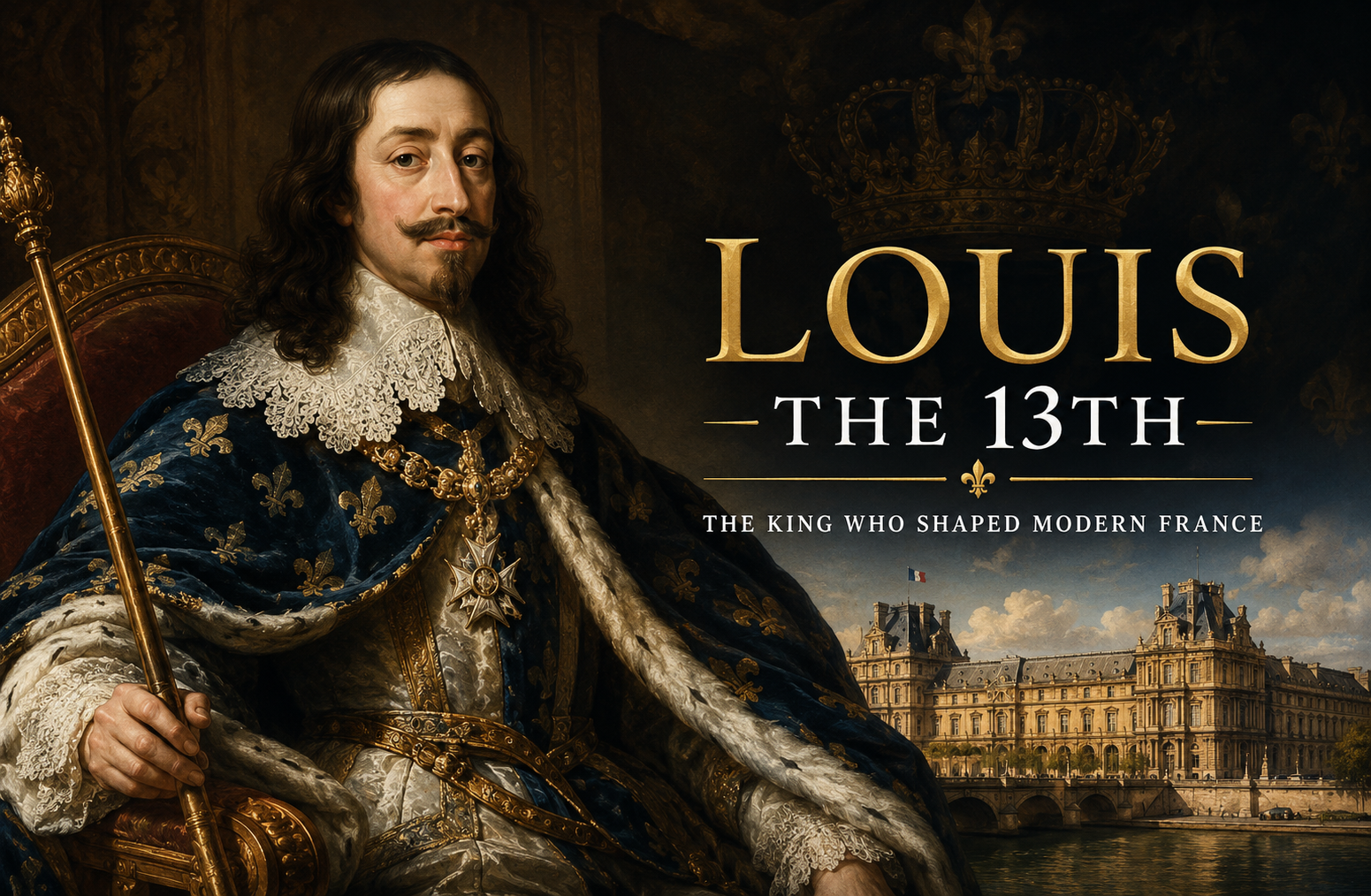
Louis the 13th: The King Who Shaped Modern France
Louis the 13th remains one of the most influential monarchs in French history, yet he is often overshadowed by his famous son, Louis XIV. While many people recognize his name from history books or popular culture, few fully understand how important his reign was in transforming France into a centralized and powerful European state. His leadership, combined with the political skill of Cardinal Richelieu, laid the foundation for the rise of French power that would dominate Europe for generations.
Understanding Louis the 13th provides valuable insight into how modern France emerged from a fragmented kingdom into a unified nation. His reign witnessed major political reforms, military victories, religious conflicts, and administrative changes that permanently altered the French state.
Who Was Louis the 13th?
Louis XIII of France was King of France from 1610 until his death in 1643. Born on September 27, 1601, he became king at the age of nine following the assassination of his father, Henry IV.
Because he was too young to rule independently, his mother, Marie de’ Medici, served as regent during the early years of his reign. These formative years were marked by political instability, noble rivalries, and struggles for power within the French court.
As he matured, the young king gradually asserted control over the government and sought to strengthen royal authority. His reign would become a turning point in French history.
Early Life and Path to the Throne
The future king was born into the Bourbon dynasty at a time when France was recovering from decades of religious conflict. His father had worked tirelessly to restore stability after the French Wars of Religion.
When Henry IV was assassinated in 1610, France suddenly faced uncertainty. Louis inherited the throne as a child, leaving the kingdom vulnerable to factional disputes.
Several challenges defined his early years:
- Political influence of powerful nobles
- Religious tensions between Catholics and Protestants
- Economic difficulties across parts of the kingdom
- Competition among royal advisers for influence
These experiences shaped his understanding of leadership and convinced him that strong central authority was necessary for national stability.
The Political Environment of Seventeenth-Century France
To appreciate the achievements of this monarch, it is important to understand the France he inherited.
The kingdom was far from unified. Regional nobles retained considerable independence, and local authorities often resisted royal directives. Religious divisions persisted despite efforts to maintain peace.
Several European powers also competed for influence, including:
- Spain
- England
- Holy Roman Empire
France needed stronger institutions if it hoped to compete successfully on the European stage.
Louis the 13th and Cardinal Richelieu
No discussion of Louis the 13th would be complete without examining his relationship with Cardinal Richelieu.
Richelieu became the king’s chief minister in 1624 and played a central role in shaping government policy. While historians sometimes focus primarily on Richelieu’s influence, it is important to recognize that the cardinal operated with the king’s approval and support.
Together they pursued several key objectives:
Strengthening Royal Authority
One of their primary goals was reducing the political power of rebellious nobles.
Measures included:
- Demolishing unauthorized fortifications
- Suppressing noble revolts
- Expanding royal administration
- Increasing central control over provinces
These actions significantly increased the power of the monarchy.
Limiting Internal Opposition
The government sought to eliminate threats to national unity.
Officials monitored political conspiracies, enforced royal decrees, and expanded administrative oversight throughout the kingdom.
Building a Stronger State
Administrative reforms improved governance and taxation while strengthening the monarchy’s ability to project power.
These reforms laid the groundwork for the highly centralized state later associated with Louis XIV.
Religious Conflicts During the Reign
Religion remained one of the most challenging issues facing France.
The Protestant population, often referred to as Huguenots, enjoyed certain rights under earlier agreements. However, some Protestant strongholds possessed military and political autonomy that concerned the crown.
The Siege of La Rochelle
One of the most significant events of the reign was the siege of La Rochelle between 1627 and 1628.
The city served as a major Protestant center and resisted royal authority.
After a lengthy siege, royal forces captured the city. This victory reduced Protestant political independence while allowing many religious freedoms to remain intact.
The outcome strengthened the monarchy and reinforced the principle that political authority ultimately rested with the crown.
Military Achievements and Foreign Policy
Foreign policy became increasingly important during the reign.
France sought to counter the influence of the powerful Habsburg dynasty, which controlled territories across Europe.
Involvement in European Affairs
Although France was a Catholic nation, political considerations often outweighed purely religious concerns.
The government supported efforts to limit Habsburg power and expand French influence.
This strategy helped position France as a leading European power.
The Thirty Years’ War
The reign coincided with the devastating Thirty Years’ War.
France entered the conflict during the later stages, seeking to weaken its rivals and secure strategic advantages.
Military successes during this period enhanced French prestige and expanded the kingdom’s influence across Europe.
Administrative Reforms That Changed France
One of the most lasting contributions of Louis the 13th was administrative modernization.
The monarchy developed more efficient systems for governing the kingdom.
Expansion of Royal Officials
The crown increasingly relied on appointed officials rather than local nobles.
Benefits included:
- Greater policy consistency
- Improved tax collection
- Better enforcement of laws
- Enhanced national coordination
Growth of Central Government
Government departments became more organized and capable.
This administrative evolution represented a major step toward the modern state.
Many structures developed during this period continued influencing French governance long after the king’s death.
The Personal Character of Louis XIII
Historical portrayals often vary.
Some writers have depicted him as reserved, cautious, and deeply private. Others have emphasized his determination and commitment to royal responsibility.
Several characteristics appear consistently in historical accounts:
- Strong sense of duty
- Personal discipline
- Religious devotion
- Interest in military affairs
- Commitment to strengthening the monarchy
Unlike many rulers who sought public admiration, he often focused on practical governance rather than personal glory.
Cultural Contributions and Artistic Interests
Although his reign is frequently remembered for politics and warfare, the king also supported culture and the arts.
He showed interest in:
- Music
- Literature
- Architecture
- Court ceremonies
In fact, he was known to participate in musical activities himself.
These cultural developments helped strengthen royal prestige and contributed to the broader flourishing of French artistic life.
Challenges and Criticisms of His Reign
Like all historical leaders, Louis the 13th faced criticism.
Historians have identified several challenges associated with his rule.
Heavy Taxation
Military campaigns required substantial funding.
Many citizens experienced financial burdens as the government sought resources for wars and administrative reforms.
Political Repression
Efforts to centralize authority sometimes limited traditional privileges enjoyed by nobles and local authorities.
Critics argued that these policies reduced political diversity within the kingdom.
Religious Tensions
Although political stability improved, conflicts between religious groups remained a source of tension.
These issues continued affecting French society long after his reign ended.
Why Historians View Him as Important
Modern historians increasingly recognize that Louis XIII played a critical role in shaping France’s future.
Several achievements stand out:
Creation of a Strong Central State
His government significantly reduced internal fragmentation.
Increased International Influence
France emerged as a major European power.
Administrative Modernization
Government institutions became more effective and professional.
Foundations for Future Success
The achievements of Louis XIV would have been far more difficult without the groundwork established during his father’s reign.
Many scholars now view Louis XIII as one of the architects of modern France.
Common Misconceptions About Louis the 13th
Several myths continue to influence public understanding.
Myth 1: Richelieu Ruled Alone
While Richelieu was enormously influential, the king remained the ultimate authority.
Major decisions required royal approval.
Myth 2: He Was a Weak Monarch
Historical evidence suggests the opposite.
His success in consolidating royal power demonstrates significant political skill.
Myth 3: His Reign Was Overshadowed Completely
Although Louis XIV became more famous, many institutional reforms originated during his father’s reign.
Understanding this distinction is essential for appreciating French history.
Lasting Legacy of Louis the 13th
The long-term impact of his reign can still be observed in discussions of state-building and governance.
Key elements of his legacy include:
- Stronger national institutions
- Expanded royal authority
- Greater administrative efficiency
- Enhanced military capability
- Increased international influence
His policies transformed France from a kingdom struggling with internal divisions into a more cohesive and powerful state.
Many historians regard this transformation as one of the most important developments in seventeenth-century Europe.
For readers interested in deeper academic research on early modern France, the educational resources available through Encyclopaedia Britannica provide additional historical context and scholarly background.
Lessons Modern Leaders Can Learn
Although centuries have passed, several lessons remain relevant.
Clear Strategic Vision Matters
Long-term goals helped guide policy decisions throughout the reign.
Institutions Are More Important Than Individuals
Strong organizations create lasting stability.
Balancing Reform and Stability Is Difficult
Successful leaders must introduce change while maintaining public confidence.
National Unity Requires Effective Governance
Political fragmentation can weaken a country’s ability to address larger challenges.
These lessons explain why historians continue studying this period today.
Frequently Asked Questions
Who was Louis the 13th?
Louis the 13th was King of France from 1610 to 1643 and played a major role in strengthening royal authority and centralizing government power.
Why is Louis XIII important in French history?
He helped transform France into a stronger and more unified state, creating foundations that later supported French dominance in Europe.
What was Cardinal Richelieu’s role?
Cardinal Richelieu served as chief minister and worked closely with the king to strengthen the monarchy and expand French influence.
Did Louis XIII fight in the Thirty Years’ War?
Yes. France entered the conflict during his reign to counter Habsburg influence and enhance French strategic interests.
What happened during the Siege of La Rochelle?
Royal forces besieged and captured La Rochelle, reducing Protestant political independence while maintaining certain religious rights.
How did Louis XIII influence modern France?
His administrative reforms, centralization policies, and expansion of royal authority contributed significantly to the development of the modern French state.
Conclusion
Louis the 13th occupies a unique place in European history. While his son often receives greater public attention, the achievements of this king were fundamental to France’s rise as a major power. Through administrative reform, military success, political centralization, and strategic leadership, he helped reshape the kingdom during a transformative period.
His reign demonstrates how institutional change can have effects that last far beyond a ruler’s lifetime. The stronger government, expanded influence, and greater national unity that emerged under his leadership continued shaping France for generations. For anyone seeking to understand the evolution of modern European states, studying Louis the 13th remains both valuable and essential.