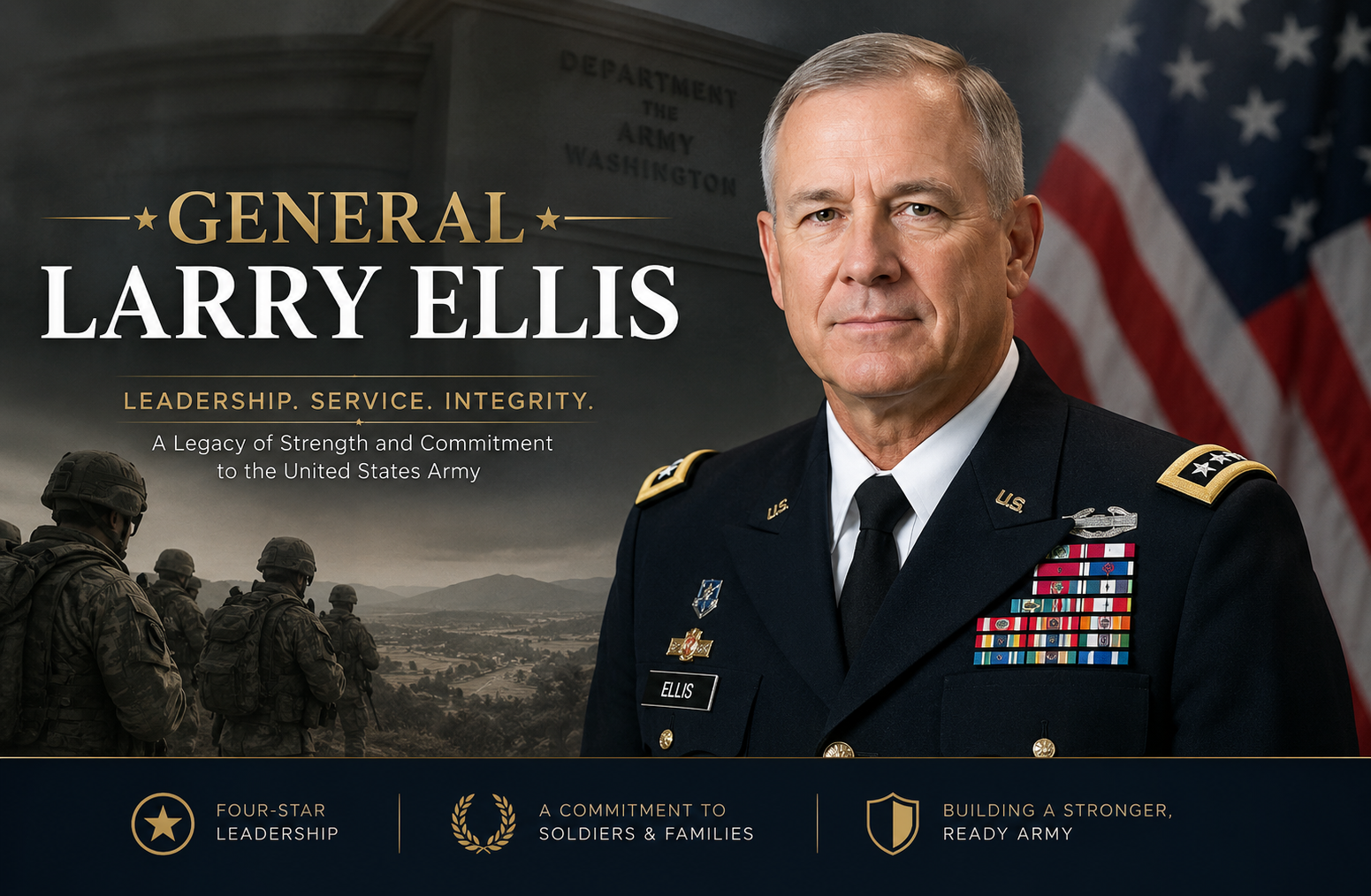
General Larry Ellis: Leadership, Legacy, and Military Impact
General Larry Ellis is widely recognized as one of the most influential senior leaders in modern United States Army history. When people search for this name, they are usually looking for clear, factual, and trustworthy information about who he is, what roles he held, and why his leadership still matters today. This article is written to directly answer that intent in a people-first, informational tone, with careful attention to accuracy, historical context, and real-world relevance.
From shaping Army readiness at the highest institutional level to influencing how large organizations think about leadership, General Larry Ellis represents a case study in disciplined command, strategic thinking, and ethical responsibility. This guide explores his background, career milestones, leadership philosophy, and lasting influence, while also addressing common questions and misconceptions.
Who Is General Larry Ellis
General Larry Ellis is a retired four-star general of the United States Army who served in several of the Army’s most senior leadership roles, including Vice Chief of Staff of the Army. His career spanned more than three decades, during which he played a central role in shaping force readiness, personnel policy, and operational leadership during periods of significant global change.
He is best known for his work at the institutional level of the Army, where decisions affect not only active operations but also training, doctrine, and the long-term health of the force. Unlike battlefield commanders who are often remembered for a single campaign, his influence is measured by systems built, policies reformed, and leaders developed over time.
Early Life and Military Education
Understanding the career of General Larry Ellis begins with his professional foundation. Like many senior military leaders, his early development combined formal education, mentorship, and progressive responsibility.
Academic Background
General Ellis graduated from the United States Military Academy at West Point, an institution known for producing officers trained in leadership, ethics, and engineering-based problem solving. West Point’s emphasis on duty, honor, and service strongly influenced his leadership approach throughout his career.
In addition to West Point, he completed advanced military education, including senior service college level programs designed to prepare officers for strategic leadership. These programs focus on joint operations, national security policy, and large-scale organizational management.
Commissioning and Early Service
After commissioning as an Army officer, he served in a variety of command and staff roles. Early assignments are often overlooked, but they are critical in shaping how senior leaders later approach decision-making. In these formative years, he gained experience in:
- Leading soldiers at the unit level
- Managing personnel and logistics
- Operating within complex command structures
These experiences built the practical leadership skills that later supported his rise to the Army’s highest levels.
Career Progression and Major Commands
The professional rise of General Larry Ellis followed a steady trajectory marked by trust, performance, and adaptability.
Command Roles
Over the course of his career, he held multiple command positions, each increasing in scope and complexity. Command at higher levels requires balancing mission execution with soldier welfare, resource constraints, and long-term planning.
Key aspects of his command experience included:
- Oversight of large formations with thousands of personnel
- Responsibility for training readiness and operational preparedness
- Integration of new policies and organizational reforms
Staff Leadership and Strategic Influence
While command roles develop tactical leadership, staff roles develop strategic thinking. General Ellis served in several high-impact staff positions where he influenced Army-wide policies.
These roles required:
- Coordinating across multiple Army departments
- Advising senior civilian and military leadership
- Translating national defense strategy into practical force structure decisions
This blend of command and staff experience positioned him for one of the most influential roles in the Army.
General Larry Ellis as Vice Chief of Staff of the Army
Responsibilities of the Role
As Vice Chief of Staff of the Army, General Larry Ellis was effectively the second-highest-ranking officer in the service. This position carries immense responsibility, particularly in balancing operational demands with long-term institutional needs.
Key responsibilities included:
- Overseeing Army readiness and force management
- Supervising personnel policies affecting hundreds of thousands of soldiers
- Supporting the Chief of Staff in strategic planning and execution
This role is less visible to the public but critically important to the Army’s ability to function effectively.
Leadership During Change
His tenure coincided with a period of transition in the global security environment. The Army was adapting to evolving threats, budget pressures, and changes in warfare.
During this time, he emphasized:
- Professional development of officers and noncommissioned officers
- Ethical leadership and accountability
- Sustainable readiness rather than short-term performance gains
These priorities helped shape the Army’s institutional resilience.
Leadership Philosophy and Management Style
One reason General Larry Ellis remains relevant today is the clarity of his leadership philosophy. His approach was grounded in principles that apply beyond the military.
People-Centered Leadership
Despite operating at a strategic level, he consistently emphasized the importance of people. Policies, in his view, were only effective if they supported soldiers and their families.
Core beliefs included:
- Leadership is a responsibility, not a privilege
- Trust is built through consistency and fairness
- Organizational success depends on individual development
Discipline and Accountability
He was also known for reinforcing high standards. Accountability was not seen as punishment but as a tool for maintaining trust and effectiveness.
This balance between care and discipline is often cited in leadership studies as a model for large organizations.
Contributions to Army Readiness and Personnel Systems
Force Readiness
A major focus of General Larry Ellis was ensuring that the Army remained ready to respond to national needs. Readiness is not only about equipment but also training, morale, and leadership depth.
He supported initiatives that:
- Improved training standards
- Streamlined readiness reporting
- Aligned resources with operational priorities
Personnel Policy Reform
Personnel systems often determine whether talented individuals stay and grow within an organization. During his service, he worked on reforms aimed at:
- Career progression transparency
- Leadership development pipelines
- Fair and consistent evaluation systems
These efforts contributed to a more professional and adaptable force.
Ethical Leadership and Institutional Integrity
Ethics played a central role in his leadership approach. At senior levels, ethical failures can undermine entire institutions.
General Larry Ellis consistently reinforced:
- The importance of ethical decision-making
- Clear expectations for leader conduct
- Institutional accountability mechanisms
This focus helped strengthen trust both within the Army and with the public it serves.
Public Service After Military Retirement
After retiring from active duty, he continued to contribute through advisory roles, board memberships, and leadership development efforts.
His post-military work often focuses on:
- Organizational leadership
- Governance and oversight
- Mentorship of emerging leaders
These activities demonstrate how military leadership experience can translate into broader public and private sector value.
Why General Larry Ellis Still Matters Today
The relevance of General Larry Ellis lies not in past titles but in lasting influence. His career offers lessons for anyone interested in leadership at scale.
Key takeaways include:
- Long-term thinking is essential for institutional health
- Leadership development must be intentional and continuous
- Ethical standards are foundational, not optional
In an era of rapid change, these lessons remain highly applicable.
Misconceptions and Clarifications
Because information online is often fragmented, several misconceptions exist.
Common misunderstandings include:
- Confusing his role with operational battlefield commanders
- Underestimating the importance of institutional leadership
- Assuming senior staff roles are purely administrative
In reality, his influence was strategic, systemic, and long-lasting.
Frequently Asked Questions
What is General Larry Ellis best known for?
He is best known for serving as Vice Chief of Staff of the Army and shaping institutional readiness and personnel policy.
Was General Larry Ellis a four-star general?
Yes, he retired at the rank of four-star general in the United States Army.
Did he command troops in combat?
He held multiple command roles during his career, though his most influential work occurred at the strategic and institutional level.
What leadership lessons are associated with him?
His leadership emphasizes accountability, ethical standards, and long-term organizational development.
Is General Larry Ellis still involved in public service?
After retirement, he has remained active in advisory and leadership roles outside active military service.
Conclusion
General Larry Ellis represents a model of strategic military leadership focused on people, systems, and ethical responsibility. His career demonstrates that lasting impact often comes not from visibility, but from decisions that strengthen institutions over time. By understanding his roles, leadership philosophy, and contributions, readers gain insight into how senior military leadership shapes national defense beyond the battlefield.