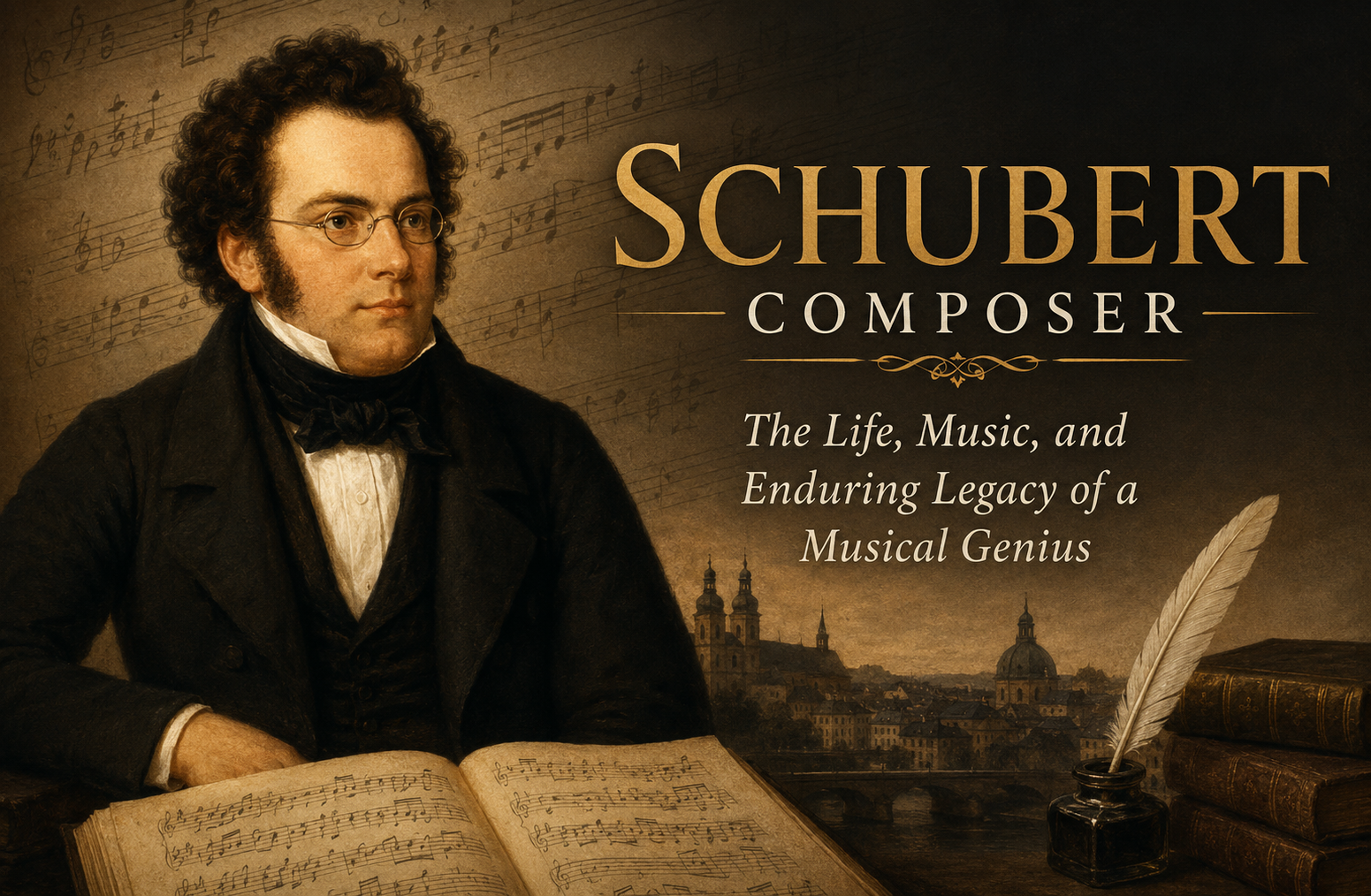
Schubert Composer: The Life, Music, and Enduring Legacy of a Musical Genius
When people search for schubert composer, they are usually looking for more than a basic biography. They want to understand why Franz Schubert remains one of the most admired figures in classical music, how he transformed musical composition during his short life, and why his works continue to influence musicians, scholars, and audiences nearly two centuries after his death. Schubert’s story is remarkable because he achieved extraordinary artistic success despite facing financial hardship, limited public recognition during his lifetime, and a life cut tragically short at the age of 31.
Today, Schubert is widely regarded as one of the greatest composers of the Romantic era. His ability to blend emotional depth, melodic beauty, and poetic expression created a body of work that remains central to concert halls, music education, and cultural history. Understanding his contributions offers valuable insight into the development of Western classical music and the creative power of artistic vision.
Schubert Composer: Understanding His Historical Importance
Franz Schubert was born on January 31, 1797, in Vienna, Austria. He lived during a fascinating transitional period between the Classical and Romantic eras. While composers such as Wolfgang Amadeus Mozart and Ludwig van Beethoven established the foundations of classical composition, Schubert expanded those traditions with greater emotional expression and lyrical richness.
Many music historians consider Schubert a bridge between two musical worlds. He respected classical structures while introducing new levels of emotional storytelling that would later define Romantic music.
Several qualities make him historically significant:
- Exceptional melodic invention
- Deep emotional expression
- Revolutionary contributions to art songs
- Mastery of chamber music
- Influence on future Romantic composers
- Ability to blend poetry and music seamlessly
Although he was not widely celebrated during his lifetime, his reputation grew dramatically after his death, eventually securing his place among the greatest composers in history.
Early Life and Musical Education
Schubert was born into a middle-class family. His father worked as a schoolteacher and recognized his son’s musical abilities at an early age.
Music became part of Schubert’s daily life from childhood. He learned violin from his father and piano from his brother. His natural talent quickly became evident.
At the age of eleven, he earned admission to the Imperial Seminary in Vienna. There he received formal musical training and gained access to excellent musical resources. During this period, he encountered the works of leading composers and began developing his own compositional voice.
Even as a teenager, Schubert demonstrated remarkable productivity. He composed symphonies, chamber works, sacred music, and songs while still receiving his education.
His early years reveal an important lesson about artistic development: exceptional talent often flourishes when combined with consistent learning, exposure to great works, and disciplined practice.
The Musical Environment of Vienna
Vienna was one of Europe’s most important cultural centers during Schubert’s lifetime. The city attracted composers, performers, intellectuals, and artists from across the continent.
Living in Vienna exposed Schubert to:
- Public concerts
- Opera performances
- Literary circles
- Musical innovation
- Influential artistic communities
This environment helped shape his creative identity.
Unlike many famous composers who traveled extensively, Schubert spent most of his life in and around Vienna. Yet this relatively limited geographic experience did not restrict his artistic imagination. Instead, he absorbed the cultural richness surrounding him and transformed it into music of universal appeal.
Schubert’s Revolutionary Contribution to Art Songs
One of Schubert’s greatest achievements was elevating the German art song, commonly known as the Lied.
Before Schubert, songs often served as simple musical settings for poetry. Schubert transformed them into sophisticated artistic works where music and text became equal partners.
His songs demonstrate extraordinary sensitivity to language, mood, and narrative.
Notable examples include:
- Erlkönig
- Gretchen am Spinnrade
- Ave Maria
- Die Forelle
- Winterreise
- Die schöne Müllerin
These compositions reveal how Schubert used harmony, rhythm, and melody to deepen poetic meaning.
For instance, in Erlkönig, the piano creates a sense of relentless motion that mirrors the dramatic tension of the story. Such innovation changed the future of vocal music.
Many scholars consider Schubert the greatest song composer in Western music history.
The Power of Melody
Perhaps the most distinctive feature of Schubert’s music is melody.
Listeners often notice that his themes feel natural, memorable, and emotionally direct. His melodies possess an almost vocal quality, even in purely instrumental works.
This melodic gift appears across his entire catalog:
- Symphonies
- Piano sonatas
- Chamber music
- Sacred works
- Songs
His ability to create beautiful musical lines helped make his works accessible while maintaining artistic sophistication.
Even listeners with little formal musical training often find themselves emotionally moved by Schubert’s melodies.
Major Works That Define His Legacy
Schubert composed more than 1,000 works during his brief life.
Several stand out as landmarks of classical music.
Symphony No. 8 in B Minor “Unfinished”
This symphony remains one of music’s greatest mysteries because Schubert completed only two movements.
Despite its incomplete state, it is considered a masterpiece due to its emotional depth and innovative orchestration.
Symphony No. 9 in C Major “Great”
This expansive symphony demonstrates Schubert’s mastery of large-scale orchestral writing.
Its grandeur influenced later composers and expanded expectations for symphonic composition.
Winterreise
Winterreise is a song cycle based on poems by Wilhelm Müller.
It explores themes of loneliness, heartbreak, despair, and human resilience.
Many musicians regard it as one of the greatest achievements in vocal music.
Piano Sonata in B-flat Major
Written near the end of his life, this sonata reveals extraordinary maturity and emotional complexity.
It remains a cornerstone of piano performance repertoire.
String Quintet in C Major
This chamber masterpiece combines technical brilliance with profound emotional expression.
Many critics consider it among the finest chamber works ever written.
Challenges Schubert Faced During His Life
Despite his artistic accomplishments, Schubert faced significant obstacles.
Financial Difficulties
Unlike some composers who secured prestigious positions or wealthy patrons, Schubert struggled financially throughout much of his life.
Income from publishing and performances remained inconsistent.
Limited Recognition
Many of his greatest works received little attention while he was alive.
Public acclaim came slowly, and some masterpieces were not fully appreciated until decades later.
Health Problems
Schubert suffered from serious health issues during his later years.
These challenges affected both his personal life and professional opportunities.
Competition in Vienna
Vienna’s musical scene was highly competitive. Living in the same city as Beethoven presented additional challenges for a young composer seeking recognition.
Yet Schubert continued composing with remarkable determination.
What Makes Schubert’s Music Unique?
Many talented composers existed during Schubert’s era, yet his music remains instantly recognizable.
Several characteristics distinguish his style.
Emotional Honesty
Schubert’s works often feel deeply personal.
He explored joy, sorrow, hope, isolation, and longing with exceptional sincerity.
Seamless Blend of Poetry and Music
His songs demonstrate a rare ability to transform literary ideas into musical experiences.
Harmonic Innovation
Schubert frequently employed unexpected harmonic shifts that created emotional surprise and depth.
Lyricism
His music sings naturally, whether written for voices or instruments.
Human Connection
Listeners often feel a direct emotional connection with his compositions.
This timeless quality helps explain his enduring popularity.
Influence on Later Composers
The impact of the schubert composer legacy extends far beyond his own generation.
Many influential musicians drew inspiration from his work.
Among them were:
- Robert Schumann
- Johannes Brahms
- Franz Liszt
- Antonín Dvořák
- Gustav Mahler
These composers admired Schubert’s melodic genius, emotional depth, and innovative use of harmony.
His influence can still be heard in modern classical performance and composition.
Lessons Modern Musicians Can Learn from Schubert
Schubert’s life offers valuable lessons for artists in every field.
Create Consistently
He maintained extraordinary productivity despite obstacles.
Focus on Craft
His success resulted not only from talent but also from relentless dedication to composition.
Stay Authentic
Schubert remained true to his artistic voice rather than chasing trends.
Value Long-Term Impact
Recognition did not arrive quickly, yet his work ultimately transformed music history.
These lessons remain relevant for contemporary creators facing similar challenges.
Schubert’s Enduring Presence in Modern Culture
Nearly two hundred years after his death, Schubert remains a central figure in music education and performance.
His compositions appear regularly in:
- International concert programs
- Conservatory curricula
- Academic research
- Recording projects
- Documentary films
- Music competitions
Students continue studying his techniques because they reveal fundamental principles of melody, harmony, and musical expression.
His music also appears in films, television productions, and cultural events, introducing new audiences to his work.
Why Schubert Still Matters Today
In an age dominated by digital technology and rapid cultural change, Schubert’s music continues to resonate.
One reason is its emotional authenticity.
His compositions address experiences that remain universal:
- Love
- Loss
- Hope
- Loneliness
- Friendship
- Human resilience
These themes transcend historical periods and cultural boundaries.
Another reason is the remarkable balance between complexity and accessibility. Scholars can spend years analyzing his compositions, while casual listeners can appreciate their beauty immediately.
This combination is rare and helps explain his lasting relevance.
Scholarly Research and Historical Importance
Modern scholarship continues uncovering new insights into Schubert’s life and work.
Researchers study:
- Original manuscripts
- Historical performance practices
- Correspondence
- Cultural influences
- Compositional techniques
For readers interested in academic research about music history and classical composition, the Harvard University Library Music Collections provides valuable educational resources.
Continued scholarly attention reflects the depth and significance of Schubert’s contributions.
How to Begin Exploring Schubert’s Music
For newcomers, the extensive catalog can seem overwhelming.
A practical listening path includes:
- Ave Maria
- Erlkönig
- Symphony No. 8 “Unfinished”
- Trout Quintet
- Winterreise
- Symphony No. 9 “Great”
- String Quintet in C Major
This sequence introduces different aspects of his musical personality and provides a well-rounded understanding of his achievements.
Frequently Asked Questions
Who was Franz Schubert?
Franz Schubert was an Austrian composer born in 1797 who became one of the most important figures in Western classical music and an early pioneer of Romantic musical expression.
Why is Schubert famous?
He is famous for his extraordinary melodies, influential art songs, chamber music, symphonies, and his ability to combine emotional depth with musical sophistication.
How many works did Schubert compose?
Schubert composed more than 1,000 works, including songs, symphonies, piano pieces, chamber music, and sacred compositions.
What is Schubert’s most famous piece?
Ave Maria is among his most widely recognized works, although many scholars also highlight Winterreise and the Unfinished Symphony as defining masterpieces.
Did Schubert know Beethoven?
Yes. Schubert lived in Vienna during Beethoven’s lifetime and deeply admired him. Their lives overlapped, though their personal interaction was limited.
Why is Schubert important in music history?
He helped bridge the Classical and Romantic eras, transformed the art song, expanded emotional expression in music, and influenced generations of composers.
Conclusion
Franz Schubert occupies a unique place in the history of music. His life was brief, but his artistic achievements were extraordinary. Through his songs, symphonies, chamber works, and piano compositions, he expanded the emotional possibilities of classical music and helped shape the Romantic era.
The enduring appeal of the schubert composer legacy lies in its humanity. His music speaks directly to universal emotions while maintaining remarkable artistic sophistication. Whether studied by scholars, performed by professionals, or enjoyed by casual listeners, Schubert’s work continues to inspire admiration and discovery. His story demonstrates how creative brilliance can leave a lasting impact regardless of circumstance, recognition, or lifespan.